
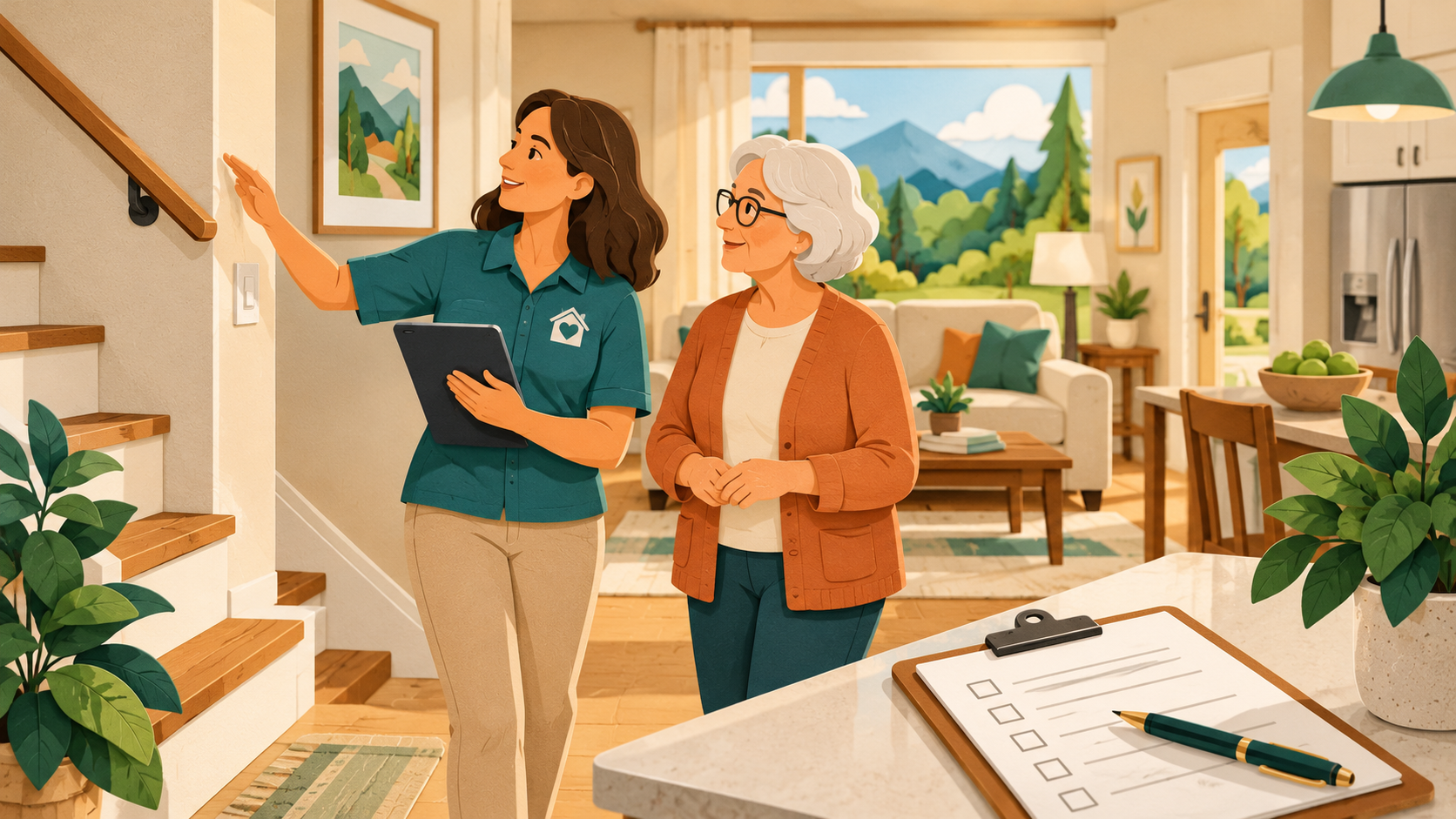
When people hear the words home safety assessment, they sometimes imagine someone arriving with a clipboard and a long list of everything wrong with their house.
That's not the point.
A thoughtful home safety assessment is about understanding how a person lives, identifying potential hazards, and exploring practical ways to make everyday activities easier and safer.
For older adults who want to remain in their homes, it can be a useful first step toward planning with confidence.
It starts with a conversation
Before looking at stairways or bathrooms, it's important to understand the people who live in the home.
What activities matter most to them? Are there rooms they avoid? Are there places where they feel unsteady or uncomfortable? Have everyday tasks become more difficult?
Someone who loves gardening may have very different priorities from someone who spends most of their time in a home office or enjoys hosting family dinners.
The goal is to support the person's lifestyle, not impose someone else's idea of how they should live.
A room-by-room look at the home
A home safety assessment generally considers areas such as:
Entrances and outdoor pathways. Steps, handrails, lighting, walking surfaces, and how easily someone can enter and leave the house.
Living spaces and hallways. Furniture placement, trip hazards, cords, rugs, lighting, and clear pathways.
Bathrooms. Bathing access, slippery surfaces, toilet accessibility, available support, and lighting.
Bedrooms. Bed access, nighttime pathways, lighting, and frequently used belongings.
Kitchens. Storage heights, reach, appliance access, floor surfaces, and everyday workflow.
Stairways and laundry areas. Handrails, visibility, footing, and whether essential daily activities require navigating stairs.
Depending on the assessment's scope, other concerns such as smoke alarms, emergency preparedness, and basic household safety may also be reviewed.
What an assessment isn't
A home safety assessment is not a home inspection for real estate purposes. It isn't a medical diagnosis or a guarantee that falls or injuries won't occur.
It also isn't an automatic recommendation to install grab bars everywhere or remodel the bathroom.
Some situations require specialized expertise. An occupational therapist can assess a person's functional abilities and recommend individualized adaptations. Licensed contractors and other qualified professionals may be needed for installations, structural changes, or technical evaluations.
A good assessment helps identify when those referrals make sense.
The recommendations should fit the person and the budget
One household may benefit most from moving frequently used dishes to lower shelves. Another may need better stair lighting or a professional evaluation of bathroom accessibility.
Not every recommendation needs to happen immediately.
It helps to distinguish between concerns that deserve prompt attention, practical changes that can be made soon, and larger projects that may require additional planning.
That turns a potentially overwhelming list into a manageable plan.
What happens after the visit?
The most useful outcome is clarity.
The homeowner and family should understand which concerns were identified, why they matter, and what next steps to consider.
At Mosaic Senior Transitions, our approach to aging in place planning is grounded in the same philosophy that guides our downsizing and move management work: listen first, respect the person's choices, and make a complicated process feel manageable.
A home safety assessment can be a starting point for a conversation about how to make the home work better, now and in the years ahead.
Staying home deserves a plan, too
Families often plan carefully when someone is moving. They measure furniture, review floor plans, and coordinate dozens of details.
Staying home can benefit from that same intentional approach.
Mosaic Senior Transitions offers aging in place home safety assessment services for older adults and families in the south Denver area. Contact us to discuss whether an assessment would be a useful next step for your home.