
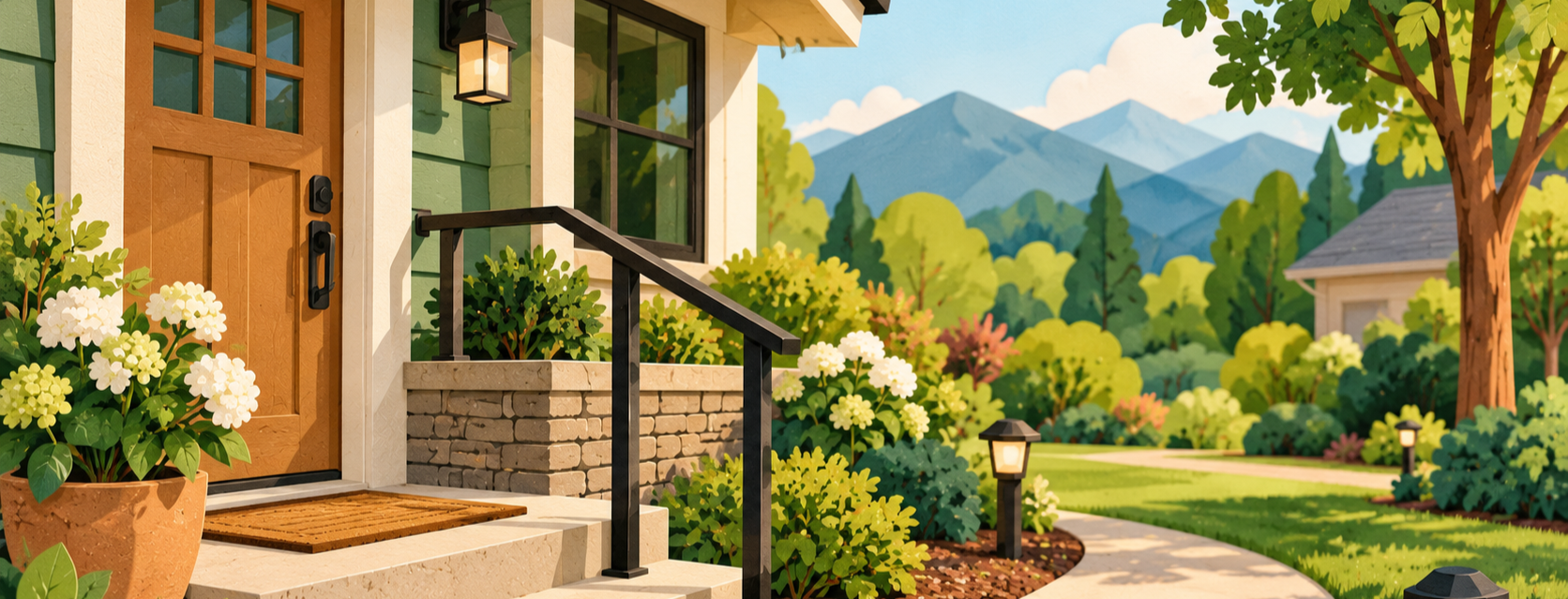
Home is where we know exactly which drawer holds the scissors, how to navigate the hallway in the dark, and which step creaks when we walk on it. That familiarity is comforting. It can also make it easy to overlook things that have quietly become harder or less safe.
Aging in place can be a wonderful option. But the home that worked perfectly 20 years ago may need a few adjustments to work just as well today.
For many older adults, the goal isn't to move. It's to stay in the home they love, maintain independence, and keep doing the things that matter to them.
Here are seven signs worth paying attention to.
1. Getting in and out of the house takes more effort
Front steps, uneven walkways, heavy doors, and poorly lit entrances can become obstacles over time.
Consider whether there's a secure handrail, enough lighting to see the path clearly, and a place to set down packages while unlocking the door.
An entrance doesn't have to look institutional to be easier to navigate.
2. The bathroom requires a balancing act
Bathrooms deserve special attention because water, hard surfaces, and tight spaces create a challenging combination.
Watch for slippery flooring, towel bars being used for support, difficulty stepping into the tub, or a toilet that's becoming harder to use.
Properly installed grab bars, improved lighting, and a safer bathing setup may help. A towel bar, however, isn't a substitute for a grab bar.
3. You find yourself reaching, climbing, or stretching
Think about the things used every day: coffee mugs, dishes, medications, cleaning supplies, and favorite clothes.
Are they stored where they can be reached comfortably? Or does getting them require a step stool, a deep bend, or standing on tiptoe?
Sometimes improving safety is as simple as rearranging a few cabinets.
4. The lighting isn't quite enough anymore
A hallway that seems bright at noon may be difficult to navigate at night.
Pay attention to stairways, entrances, bathrooms, and the route between the bedroom and bathroom.
Brighter bulbs where appropriate, task lighting, and motion-activated nightlights can make everyday movement easier.
5. The floor has become an obstacle course
Loose rugs, extension cords, cluttered pathways, and furniture that narrows a walkway are easy to overlook when we've lived with them for years.
Walk through the home and notice where someone might have to turn sideways, step over something, or navigate around furniture.
Clear pathways can make a meaningful difference without changing the personality of a room.
6. Stairs are changing how you use your home
Perhaps laundry is in the basement, the primary bedroom is upstairs, or a favorite hobby space requires several trips up and down.
The question isn't simply whether someone can use the stairs. It's whether the layout continues to support their daily routines comfortably and confidently.
Sometimes a room can be repurposed or essential supplies relocated. More significant changes may call for an occupational therapist or qualified accessibility professional.
7. Everyday tasks require more workarounds
One of the most revealing signs is the collection of small adaptations people make without noticing.
Maybe someone avoids a particular bathroom, holds onto furniture while walking through a room, or stops using a cabinet because it's difficult to reach.
These workarounds are useful information. They show where the home may no longer be supporting its resident as well as it could.
The goal isn't a perfect house
Every home has limitations. A safer home isn't necessarily one with a major renovation, and it certainly doesn't have to lose its warmth or character.
The goal is to notice potential problems before they become bigger ones, then make thoughtful changes based on the people who actually live there.
An aging in place home safety assessment can offer a fresh perspective on entrances, bathrooms, lighting, walkways, stairs, and everyday routines.
At Mosaic Senior Transitions, we believe that staying in a beloved home should be a thoughtful choice, supported by good information and practical planning.
Want a fresh set of eyes on your home? Contact Mosaic Senior Transitions to learn about our aging in place home safety assessment services in the south Denver area.